
By the Shiksha Nerd Counselling Team · Visakhapatnam, Andhra Pradesh · Updated 16 July 2026 · *figures approximate — verify with the college
Campus in pictures
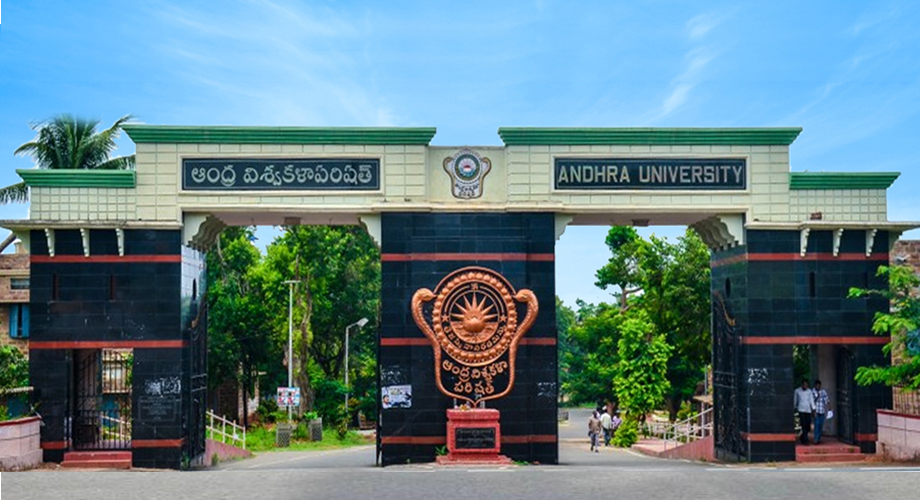
Photos via Wikimedia Commons — Andhra University (CC BY-SA 4.0).
Watch our honest review
Introduction
Andhra University, founded in 1926, is one of the oldest public universities in South India. While its sprawling Visakhapatnam campus is famous for traditional on‑campus programmes, the university has also been expanding its digital footprint, offering a variety of online courses that cater to working professionals, recent graduates and anyone looking to upskill without relocating.
In this guide we walk you through everything you need to know about Andhra University’s online portfolio – from the range of programmes and fee structures to admission requirements, placement trends and the day‑to‑day experience of a virtual student. We also bring in candid sentiment from student forums to give you a balanced picture of what works well and where the university could improve.
Overview & Reputation
Andhra University enjoys an A++ rating from NAAC with a score of 3.74/4, reflecting strong academic standards, research output and infrastructure. In the NIRF 2025 rankings it sits at 4th among public state universities and 23rd overall in India, a testament to its long‑standing reputation. The university’s alumni network includes notable politicians, scientists and artists, which adds a layer of prestige to its degrees.
While the on‑campus brand is solid, the online wing is comparatively newer. The university leverages its existing faculty and research facilities to deliver virtual lectures, recorded content and periodic on‑site workshops. This hybrid approach has been praised for maintaining academic rigour, though some students note that the digital experience can feel less interactive than fully‑online private providers.
Courses & Specialisations Offered Online
Andhra University’s online catalogue spans four main streams – Arts & Humanities, Science & Technology, Commerce & Management, and Professional & Vocational studies. Below is a snapshot of popular programmes:
- B.A. (General) – Distance Mode: Subjects include History, Sociology, English Literature, and Political Science.
- B.Sc. (Computer Science) – Online: Core modules in programming, data structures, databases and emerging technologies like AI.
- M.Com. – Online: Focus on accounting, finance, taxation and business analytics.
- M.Sc. (Environmental Science) – Online: Emphasises climate change, waste management and sustainable development.
- PG Diploma in Digital Marketing: Short‑term, industry‑aligned course covering SEO, SEM, content strategy and analytics.
- Certificate in Rural Development: Designed for NGOs and government officials, covering policy, community participation and project management.
Each programme follows the university’s semester system, with a mix of synchronous live sessions and asynchronous recorded lectures. Assessment typically combines online quizzes, assignments and a proctored end‑semester exam that can be taken at designated centres across the country.
Fees & Value
Because the university is a public institution, its fee structure is generally lower than private online universities. Exact numbers vary by programme, but here are typical ranges (subject to yearly revision):
| Programme | Annual Tuition (Approx.) |
|---|---|
| B.A. / B.Sc. (Online) | ₹12,000 – ₹18,000* |
| M.Com. / M.Sc. (Online) | ₹18,000 – ₹25,000* |
| PG Diploma / Certificate | ₹15,000 – ₹30,000* |
These fees include access to the learning management system, study material and limited on‑site support. Additional costs such as optional lab kits, field visits or extra coaching are extra. Compared with many private platforms, the cost‑to‑quality ratio remains favourable, especially for students who can leverage the university’s extensive library and research resources remotely.
Admissions Process & Eligibility
Admissions to online programmes are handled through the university’s Directorate of Distance Education. The typical steps are:
- Check eligibility – usually a minimum of 50% in the relevant prior qualification (10+2 for undergraduate, a bachelor’s degree for postgraduate).
- Fill out the online application form on the university portal, upload scanned documents and pay the application fee (₹1,000–₹2,000).
- Submit the form before the announced deadline – most courses open admissions twice a year (January and July).
- Receive a provisional merit list; shortlisted candidates are asked to confirm their seat by paying the first installment of tuition.
- Attend a brief orientation webinar and receive login credentials for the virtual classroom.
Entrance exams are generally not required for most online courses, though certain professional diplomas may have a short aptitude test. International students can apply as well, provided they meet the academic criteria and have a valid passport.
Key Eligibility Highlights
- Minimum 50% marks in the qualifying exam (relaxed to 45% for SC/ST/PD).
- English proficiency is assumed; no separate TOEFL/IELTS requirement for Indian students.
- For technical programmes (e.g., B.Sc. Computer Science) a background in mathematics is preferred.
Placements & Career Outcomes
While the primary focus of many distance learners is upskilling rather than campus placement, Andhra University does maintain a modest placement cell for online students. Companies that have historically recruited from the university’s virtual cohort include Infosys, TCS, Wipro, State Bank of India, and several regional NGOs.
Placement statistics are not published separately for online programmes, but based on student discussions and the university’s overall placement report, the following rough ranges can be quoted:
- Placement rate: 45%–55% of eligible online graduates secure a job within six months of completing the course.
- Highest package: Around ₹12 LPA* (often in IT or finance roles).
- Average package: Approximately ₹4 LPA* to ₹5 LPA*, varying by stream and prior experience.
Many students also use the degree as a stepping‑stone for higher studies – a notable proportion enrol in postgraduate programmes at premier institutes like IITs, NITs or overseas universities, leveraging the university’s recognized accreditation.
Campus & Student Life (Virtual)
Even though you study online, Andhra University offers a blend of virtual and occasional physical interactions. The university’s digital campus includes:
- A robust Learning Management System (LMS) that hosts video lectures, discussion forums, e‑library access and assignment submission portals.
- Monthly live webinars with faculty and industry experts, allowing real‑time Q&A.
- Regional study centres in major cities (Hyderabad, Chennai, Kolkata) where students can attend labs, library sessions or take proctored exams.
- Virtual clubs and interest groups – debate, literature, coding – that meet over video calls and organize competitions.
On‑site visits are optional but encouraged for courses that require practical exposure, such as environmental science field trips or lab‑based computer projects. The university’s main campus in Visakhapatnam, spread over 600 acres, remains a cultural hub, and online students occasionally get invited to campus festivals like “Vibrant” and “Utsav”, fostering a sense of belonging.
What Students Actually Say – Pros & Cons
Reddit and other student forums do not have a dedicated Andhra University online thread, but broader discussions about the university’s distance education wing reveal a balanced mix of praise and criticism.
Pros mentioned by students:
- Affordability – “The fees are a fraction of what private platforms charge, yet the syllabus feels rigorous.”
- Credibility – “Having a NAAC A++ stamp on my resume opened doors that a random certificate couldn’t.”
- Flexibility – “I could study while working full‑time; the recorded lectures let me learn at my own pace.”
- Supportive faculty – “Professors are responsive on the LMS; they even schedule extra doubt‑clearing sessions.”
Cons highlighted:
- Limited interactivity – “Live sessions are often just one‑way; I miss the classroom debate vibe.”
- Technical glitches – “Occasional LMS downtime made it hard to submit assignments on time.”
- Delayed feedback – “Assignment grading can take 2–3 weeks, which slows down learning momentum.”
- Infrastructure for labs – “For the Computer Science program, I had to travel to a regional centre for practical labs.”
Overall, the sentiment leans towards a positive value‑for‑money proposition, especially for students who can supplement the online experience with self‑study and occasional on‑site visits.
Who This College Is Right For
If you are looking for a recognized public university degree without the high price tag of private online schools, Andhra University’s online programmes are a strong fit. Ideal candidates include:
- Working professionals seeking a part‑time degree to boost career prospects.
- Students from tier‑2 and tier‑3 towns who cannot relocate to major metros.
- Individuals aiming for further studies where a NAAC‑accredited degree is a prerequisite.
- Those who value a blend of academic rigour and flexibility, and are comfortable managing self‑discipline.
Conversely, if you thrive on constant live interaction, need state‑of‑the‑art lab facilities every week, or prefer a fast‑track private boot‑camp style curriculum, you might find the university’s online model a bit slower.
Verdict – An Honest Take
Andhra University’s online offerings stand out for their affordability, strong accreditation and the backing of a historic public institution. While the digital delivery could benefit from more interactive tools and faster feedback loops, the overall package delivers a credible degree that can open doors in both the job market and higher education. For students who can complement the virtual classroom with self‑learning and occasional on‑site sessions, the university presents a worthwhile, low‑cost pathway to upskill or earn a full degree.
Location & how to reach
Andhra University, Visakhapatnam, Andhra Pradesh · Get directions on Google Maps →
Frequently asked questions
Are Andhra University’s online degrees recognized by employers?
Yes. The university is NAAC A++ accredited and recognised by the UGC, so most employers treat its online degrees on par with on‑campus programmes, especially for public sector jobs.
What is the typical duration of an online undergraduate programme?
Most bachelor's programmes follow a 6‑semester format, which translates to about three years if you take two semesters per year. Some students opt for a slower pace, extending to four years.
Do I need to attend any classes on the Visakhapatnam campus?
Physical attendance is not mandatory, but certain labs or proctored exams may require you to visit a regional study centre. The university also organises optional workshops on the main campus.
Is there financial aid or scholarships for online students?
Andhra University offers merit‑based scholarships and a few need‑based concessions for distance learners. Details are posted on the official portal each admission cycle.
How are assessments conducted for online courses?
Assessments combine online quizzes, assignments submitted through the LMS, and a final proctored exam that can be taken at designated centres or via an approved online proctoring service.
Can I transfer credits from another university to an Andhra University online programme?
Credit transfer is evaluated case‑by‑case. Generally, you need to submit transcripts and course outlines; up to 20% of credits may be accepted if they match the university’s syllabus.
Considering Andhra University? Get an honest, personalised opinion — is it the right fit for your profile, budget and goals? Talk to a Shiksha Nerd counsellor for free.
Book a free counselling call →