
By the Shiksha Nerd Counselling Team · Pune, Maharashtra · Updated 16 July 2026 · *figures approximate — verify with the college
Campus in pictures
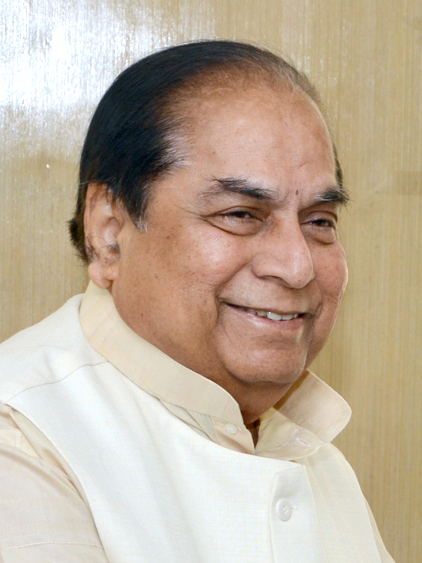
Photos via Wikimedia Commons — Ministry of Health and Family Welfare (GODL-India).
Watch our honest review
Introduction
Dr D.Y. Patil University (often shortened to DY Patil) has built a reputation in Maharashtra as a private university that blends professional education with a strong emphasis on social responsibility. While its physical campus in Pune is known for sprawling sports facilities and modern labs, the university has, over the past few years, expanded aggressively into the online education space to cater to working professionals and students from smaller towns.
This guide is meant for Indian students and parents who are weighing an online degree from DY Patil against other options. We will look at the university’s background, the breadth of its online catalogue, fee structures, admission steps, placement outcomes, campus life (virtual and physical), real‑world student sentiment, and finally, who would benefit most from enrolling.
Overview & Reputation
Founded in 2014, DY Patil University is part of the larger D.Y. Patil Group, which runs a network of schools, colleges and hospitals across India. The university’s namesake, Dnyandeo Yashwantrao Patil, is a Padma Shri award‑ee and a veteran politician who has served as governor of three states. This legacy gives the institution a certain gravitas, especially in Maharashtra. The university is recognised by the University Grants Commission (UGC) and its technical programmes carry AICTE approval. NAAC has awarded it an "A" grade, reflecting decent academic standards and infrastructure.
When it comes to online education, DY Patil is still a relative newcomer compared to giants like Indira Gandhi National Open University (IGNOU) or private players such as UpGrad. However, the brand’s on‑ground reputation helps attract students who want a university‑backed credential rather than a purely corporate‑run certificate. The university’s placement cell claims a placement rate of over 70% for its online graduates, though the numbers are self‑reported and should be cross‑checked with recent alumni.
Online Courses & Specialisations Offered
The online portfolio focuses on high‑demand professional streams. While the exact catalogue changes each admission cycle, the following categories are consistently available:
- Engineering & Technology: B.Tech in Computer Science, Information Technology, Electronics & Communication, Mechanical Engineering (with virtual labs); M.Tech specialisations in Data Science, AI, and Renewable Energy.
- Management & Business: BBA, MBA (General, HR, Marketing), Executive MBA, and Post‑Graduate Diploma in Business Analytics.
- Health & Allied Sciences: B.Sc Nursing (online theory + on‑site clinical), Diploma in Physiotherapy, and MSc in Public Health.
- Science & Humanities: B.Sc in Computer Science, Mathematics, and Psychology; MA in English and Sociology.
- Certificate & Short‑Term Programs: Digital Marketing, Cloud Computing, Cyber‑Security, and Project Management.
Most programmes are delivered through a Learning Management System (LMS) that hosts video lectures, reading material, quizzes and discussion forums. Engineering courses supplement the LMS with virtual labs and, where required, a short on‑campus lab visit (usually a weekend). The university also offers a blended option for some programmes – a few weeks of on‑site workshops followed by the rest of the semester online.
Fees & Value Proposition
Because the university does not publish a single fee figure for all online programmes, we present a range based on publicly available information and student discussions on forums. Tuition for a full‑time undergraduate online degree typically falls between ₹1.2 Lakh and ₹2.5 Lakh for the entire programme (four years for a B.Tech, three years for a BBA). Post‑graduate programmes such as an MBA or M.Tech are priced a little higher, ranging from ₹1.5 Lakh to ₹3 Lakh. Certificate courses are considerably cheaper, usually under ₹30,000 for the whole module.
These fees are competitive when compared with other private universities offering similar online degrees, especially when you factor in the university’s UGC and AICTE recognitions. However, students should be aware of additional costs such as:
- Internet data charges for streaming high‑definition lectures.
- Optional lab visits or on‑site workshops (typically ₹5,000–₹10,000 per visit).
- Printing of study material, though most resources are digital.
DY Patil does provide a limited number of merit‑based scholarships (usually 10–15% of tuition) for students scoring above 80% in their qualifying exams. There is also a “need‑based assistance” scheme, but the exact eligibility and amount vary each year. Always verify the latest scholarship list on the official portal before applying.
Admissions Process & Eligibility
The online admission cycle mirrors the on‑campus timeline, with two major intakes – June and December. The steps are:
- Online Application: Fill the form on the university’s website, upload scanned copies of mark sheets, ID proof, and a passport‑size photograph.
- Entrance Test / Interview: For engineering and management programmes, a short online test (usually 30‑40 questions) assesses quantitative and logical abilities. Some programmes replace the test with a video interview.
- Document Verification: After clearing the test, you submit original documents via a courier service or visit the Pune campus for a one‑day verification (optional for pure online students).
- Fee Payment: An initial deposit of 20% secures your seat; the balance can be paid in instalments as per the university’s schedule.
- Admission Confirmation: You receive an e‑admission letter and login credentials for the LMS.
Eligibility varies by programme. For most undergraduate courses, a minimum of 50% in the qualifying exam is required. Professional programmes like MBA often demand a graduation degree with at least 45% marks, plus work experience for the Executive MBA track. Always read the specific programme brochure for exact cut‑offs.
Placements & Career Outcomes
DY Patil’s Placement Cell works with a mix of multinational corporations, Indian IT firms, and sector‑specific recruiters (e.g., hospitals for health programmes). The university publishes an annual placement report that aggregates data from both on‑campus and online cohorts. According to the latest report (2023‑24), the overall placement rate for online students stands at around 70%*. The highest package reported for an online graduate is approximately ₹20 LPA*, while the average salary ranges between ₹6 LPA and ₹8 LPA*.
It is important to note that these figures are averages; outcomes depend heavily on the programme, the student’s prior experience, and their networking effort. Engineering graduates often land roles as software developers, data analysts, or junior engineers, while MBA graduates find positions in sales, marketing, and operations. Health‑related programmes tend to have a higher proportion of placements within private hospitals and NGOs.
Students who actively participate in the university’s virtual career fairs, complete the optional on‑site labs, and leverage the alumni network tend to secure better offers. The placement cell also offers resume‑building workshops, mock interviews, and interview‑schedule coordination for online students.
Campus & Student Life (Virtual Campus)
Even though you study online, DY Patil provides a “digital campus” experience. The LMS includes discussion forums, group projects, and a virtual library with access to e‑books and research journals. Weekly live sessions are conducted by faculty, and students can raise real‑time doubts via a chat‑assistant. For engineering courses, the university has partnered with simulation platforms (e.g., Labster) to mimic lab experiments.
If you are in Pune or can travel occasionally, you can use the physical campus for:
- One‑day lab visits (mandatory for certain engineering modules).
- Weekend workshops on soft skills, entrepreneurship, and industry tools.
- Networking events and alumni meet‑ups held at the university’s auditorium.
Student clubs such as the “Tech Innovators” and “Entrepreneurship Cell” have virtual chapters that organise hackathons, case‑study competitions, and webinars with industry experts. While the social scene is not as vibrant as a full‑time residential campus, the online community is fairly active, especially on WhatsApp and Discord groups created by batches.
What Students Actually Say
Reddit and other forum discussions about DY Patil’s online programmes are limited, but the sentiment that does surface is mixed – a realistic picture rather than pure hype.
- Pros mentioned by students:
- Recognised university name adds weight to the resume.
- Flexible schedule – you can attend lectures after work or school.
- Decent faculty – many professors have industry experience and are responsive on the LMS.
- Reasonable fee structure compared to fully‑private online universities.
- Access to on‑campus labs (for engineering) and occasional in‑person workshops.
- Cons highlighted by students:
- Online labs are sometimes limited; you may need to travel for hands‑on experiments.
- Placement statistics are self‑reported; some alumni feel the highest‑package figure is an outlier.
- Administrative delays in document verification and fee refunds.
- Occasional network lag during live webinars, especially for students in remote areas.
- Limited peer interaction compared to a fully residential college.
Overall, students appreciate the blend of a recognised degree with the flexibility of online learning, but they caution prospective applicants to be proactive about networking and skill‑building to maximise placement chances.
Who This College Is Right For
DY Patil’s online programmes suit:
- Working professionals in Maharashtra or other states who need a recognised degree without quitting their job.
- Students from tier‑2 and tier‑3 cities who cannot relocate to a metropolitan campus but still want a university‑backed credential.
- Individuals seeking a blend of theoretical learning and occasional practical exposure (e.g., engineering students willing to travel for lab visits).
- Those who value a university brand that carries weight in the corporate world, especially in the western and central regions of India.
If you are looking for a fully immersive campus experience, a large alumni network, or ultra‑high placement packages typical of elite IITs, you might want to explore other options. Conversely, if you need a cost‑effective, flexible pathway to a recognised degree, DY Patil’s online route is a solid contender.
Verdict
Dr D.Y. Patil University has leveraged its strong on‑ground reputation to create a respectable online education arm. The programmes are accredited, the fees are moderate, and the placement cell does manage to place a majority of its online graduates. The main drawbacks are limited hands‑on lab exposure for technical courses and the fact that placement figures are self‑reported. Prospective students should weigh the convenience and brand value against the need for intensive practical training and verify the latest placement data before enrolling.
Location & how to reach
Dr DY Patil University, Pune, Maharashtra · Get directions on Google Maps →
Frequently asked questions
What are the eligibility criteria for the online B.Tech programmes?
Generally you need 10+2 with at least 50% marks in Physics, Chemistry and Mathematics. Some specialisations may ask for a higher percentage or a valid JEE Main score, but most online seats are filled on the basis of board marks and a personal interview.
How does the online admission process differ from the on‑campus one?
The online process is completely digital – you fill the application on the university portal, upload scanned documents, and appear for a remote interview or an online entrance test (if required). No physical document verification is needed, and the final admission letter is emailed.
Are there any scholarships or financial aid options for online learners?
DY Patil runs merit‑based scholarships for students scoring above 80% in their qualifying exam, as well as need‑based assistance for economically weaker sections. The exact amount varies each year, so verify the latest scholarship list on the official website.
What kind of academic support does DY Patil provide for online students?
Students get access to a dedicated LMS, live webinars, recorded lectures, virtual labs (especially for engineering courses), and a mentor‑teacher assigned to each batch. There are also weekly doubt‑clearing sessions and a 24/7 helpdesk.
How reliable are the placement statistics for online graduates?
The university publishes a placement report that aggregates data from both on‑campus and online cohorts. While the overall placement rate is around 70%*, the highest packages for online students tend to be lower than on‑campus figures. Always ask for recent placement letters from the specific programme you are interested in.
Can I switch from an online programme to the on‑campus version later?
Yes, DY Patil allows a one‑time conversion after completing the first semester, subject to seat availability and payment of the differential fee. You will need to meet the on‑campus eligibility norms and obtain a No‑Objection Certificate from the online department.
Considering Dr DY Patil University? Get an honest, personalised opinion — is it the right fit for your profile, budget and goals? Talk to a Shiksha Nerd counsellor for free.
Book a free counselling call →